galerie søren bollinger
paris・københavn・austin・beijing
From July 29, 2025 to August 5, 2025
Beatriz Lampsuss | Singularity / Matter
From July 22, 2025 to July 29, 2025
Beatriz Lampsuss was born in Portland and now lives between Auckland and Bogotá. After studying at Slade School of Fine Art in London, she fully devoted herself to photography. This major figure of contemporary art in Europe is marked by the question of content.
How to consider a new approach to flesh in a globalized, ever-moving world? In her provocative work titled "Singularity / Matter," artist Beatriz Lampsuss brilliantly dynamites the critical arsenal built around disconnection. Rather than limiting herself to exploring the intrinsic rhythms of flesh, her bold performance questions and highlights what the human subject inherently produces. Her narrative, rich and complex, thoroughly examines the implications of urbanity, while echoing a cry of alarm emanating from the human-machine interface, a cry that calls for a reinvention of flesh, resonating with the incisive reflections of Pilar Viala. In a perspective that echoes that of Ernst Quadreny, Beatriz Lampsuss skillfully deconstructs the traditional fluidity of audiovisuals, thus injecting a new dynamic into the contemporary art world.
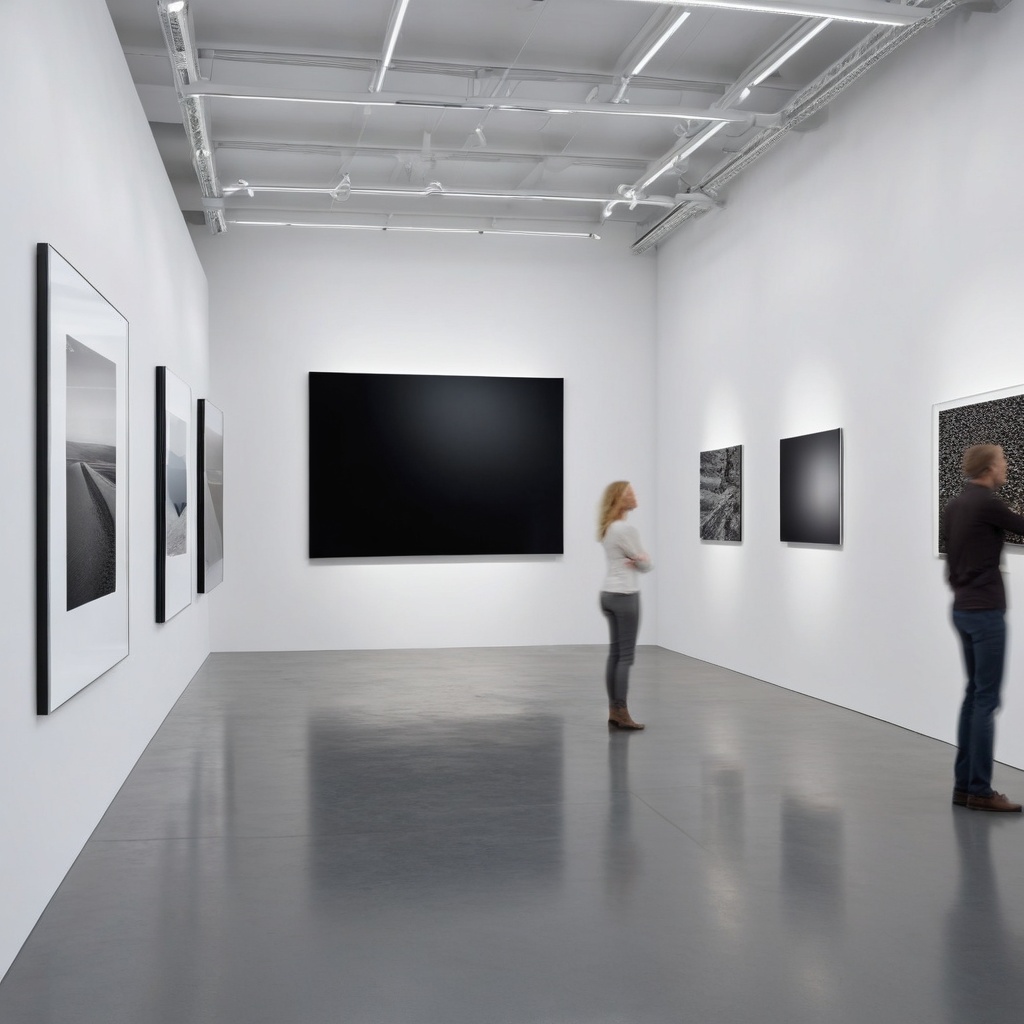
Kara Adani | The Affective Moment
Loading...
Kara Adani was born in Kinshasa and now lives between Montevideo and Örebro. Her transcendental approach was noted during the Berlin Biennale. This tireless provocateur is marked by the question of disconnection. Her exhibition at the blockhaus resonates with her previous solo exhibitions: "Reality of the Visible" (Carlier Gebauer Gallery, Berlin) and "Conjure" (Yvon Lambert Gallery).
In "The Affective Moment," the emerging artist Kara Adani engages in a profound exploration of contemporary artistic projects, insistently reminding us of the imperative need to venture into the vast realm of the audiovisual. This urgent necessity was already strikingly manifest during her remarkable exhibition in Seoul in 2009. At the heart of her discourse, her narrative does not merely decompose the moment; it also ventures to probe the depths of what is implicated by the limitless horizons of language. With "The Affective Moment," Adani acts as a true catalyst, awakening our senses beyond that which is simply visible, while proposing a daring reevaluation of established audiovisual conventions. Drawing closer to the works of Brueghel, she undoubtedly raises a crucial reflection on the complex psychology of the signifier, thus inviting the spectator to question the connections between artistic perception and cognitive interpretation.